Watch Movies Online|Full Movie Download|Movies Online Free Websites|Movies Online Stream|Online Full HD Movies. Watch and streaming your favorite full movies online on solarmovie.com and in the app!
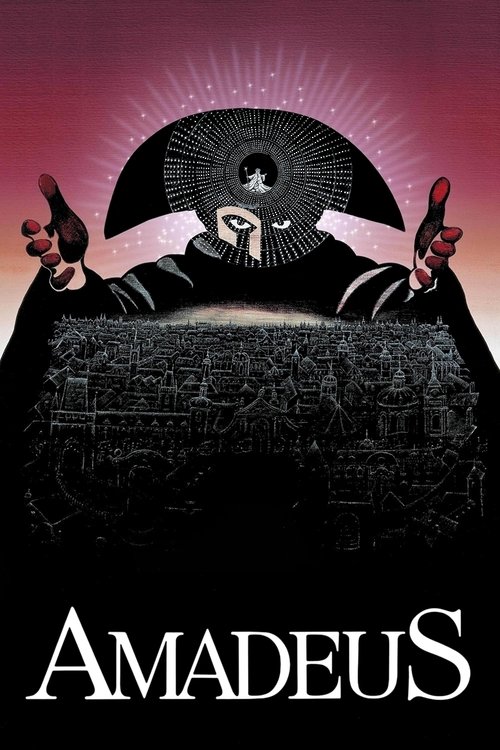
160 Minutes | Drama, History, Music | 1984-09-06
Watch Movies Online|Full Movie Download|Movies Online Free Websites|Movies Online Stream|Online Full HD Movies. Watch and streaming your favorite full movies online on solarmovie.com and in the app!
160 Minutes | Drama, History, Music | 1984-09-06
Watch Movies Online|Full Movie Download|Movies Online Free Websites|Movies Online Stream|Online Full HD Movies. Watch and streaming your favorite full movies online on solarmovie.com and in the app!
| Comedy, Action, Adventure, Science Fiction, Fantasy | 2020-12-09
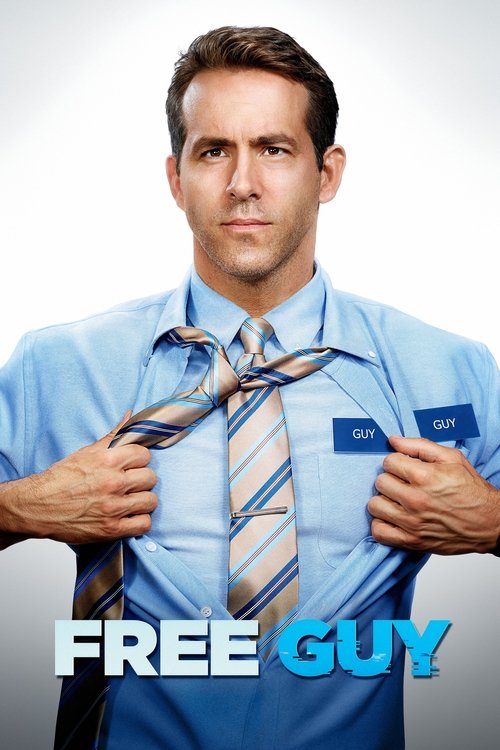
📥 Free Guy 2020
📥 DOWNLOAD HERE
Watch Movies Online|Full Movie Download|Movies Online Free Websites|Movies Online Stream|Online Full HD Movies. Watch and streaming your favorite full movies online on solarmovie.com and in the app!
135 Minutes | Drama, Thriller | 2020-03-06
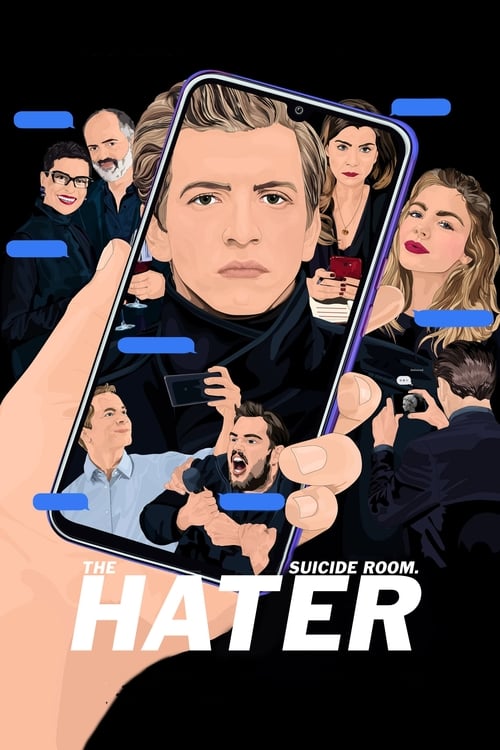
📥 The Hater 2020
📥 DOWNLOAD HERE
Watch Movies Online|Full Movie Download|Movies Online Free Websites|Movies Online Stream|Online Full HD Movies. Watch and streaming your favorite full movies online on solarmovie.com and in the app!
126 Minutes | Drama | 2018-10-06
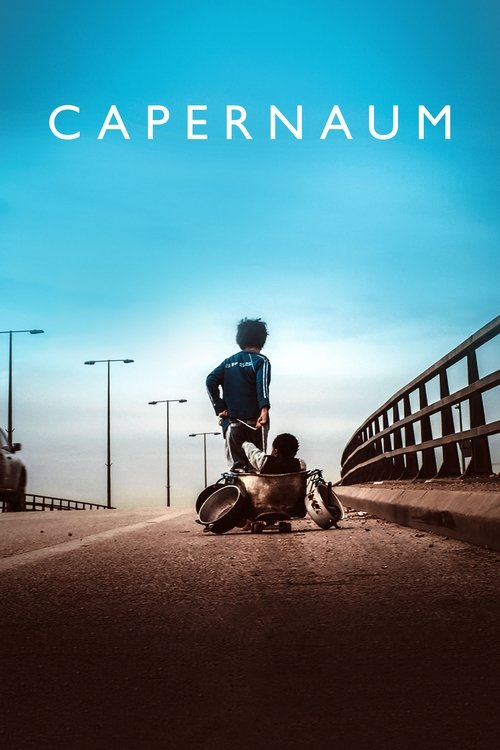
📥 Capernaum 2018
📥 DOWNLOAD HERE
**_I wouldn't call it entertaining per se, but it's certainly provocative_**
>_I saw kids who are so neglected, so abused that there's nothing anymore in their eyes. These children don't laugh, don't cry, and don't play. If you put a toy in front of them, they don't touch it. They are just numb. There's no more childhood in their eyes. After seeing these kids many times, when they started to have a trusting relationship with me, I used to ask them, "are you happy to be alive?" Ninety-nine percent of the kids answered "no". They told me: "I'm not happy to be here." "Why am I here when there'__s no one to take care of me?" "Why am I here if I'm going to be hungry all the time?" They have the feeling that they're here because they are being punished for something._
- Nadine Labaki; _Capharnaüm_ Production Notes
Taking as its subject the horrific plight of guttersnipe children in the slums of Beirut, _Capharnaüm_ is the kind of film of which a superficial reading might suggest miserablism at best, and "poverty porn" at worst. Comparisons to film such as Danny Boyle's _Slumdog Millionaire_ (2008), Stephen Daldry's _Trash_ (2014), and Sean Baker's _The Florida Project_ (2017) are probably inevitable, albeit not very informative if one wishes to parse the film. Instead, it's much more useful to view _Capharnaüm_ in the tradition of classic Italian neorealist pictures such as Luchino Visconti's _Ossessione_ (1943) and _La Terra Trema_ (19548), Roberto Rossellini's _Roma città aperta_ (1945) and _Germania anno zero_ (1948), and Vittorio De Sica's _Ladri di biciclette_ (1948) and _Umberto D._ (1952), albeit far more pessimistic than any of them.
The third film from Lebanese writer/actress/director Nadine Labaki (_Caramel_; _Where Do We Go Now?_), _Capharnaüm_ is written by Labaki, Michelle Keserwany, and Labaki's regular writing partner Jihad Hojaily (Georges Khabbaz, Labaki's husband, and the film's producer and composer, Khaled Mouzanar are credited with "screenplay collaboration"). Presenting a _milieu_ in which people are utterly discardable, the film depicts children who are literally bought and sold for a few chickens; 11-year-old girls who are married off so their family can afford the rent; babies who are fed on ice cubes covered in sugar; refugees who roam the streets; mental illness which goes untreated; and people without a Lebanese identity card who don't officially exist. Uplifting it most certainly is not. In a similar tonal key to Héctor Babenco's _Pixote: a Lei do Mais Fraco_ (1981) and Walter Salles's _Central do Brasil_ (1998), the film works because it never feels like it's exploiting, patronising, or trivialising the poverty and misfortune it depicts, never attempting to manipulate the audience into feeling a preconceived emotion. On the contrary, it's matter-of-fact, and notable for just how unsentimental it is. However, it's also deeply humanist, with genuine compassion in its DNA and a quiet rage at its core, born partly from an inherent sense of authenticity; shot in the style of _cinéma vérité_, it uses non-professional actors whose lives are not dissimilar from the characters they play, with Labaki encouraging improvisation throughout. There are some problems, of course - the framing device of a trial is poorly conceived and distracts from the superior filmmaking surrounding it, the ending is disappointingly didactic, and the litany of hardships endured by the main character does get a little over-the-top. However, this is undeniably impressive filmmaking, as harrowing and angry, as it is solicitous and respectful.
Zain El Hajj (Zain Al Rafeea) is a young boy from the slums of Beirut serving a five-year prison sentence for, as he puts it, "_stabbing a son-of-a-bitch_." Neither he nor his parents, mother Souad (Kawsar Al Haddad) and father Selim (Fadi Youssef), know Zain's exact age, as he was never officially registered, and therefore has no birth cert. As the film begins, Zain is brought before a judge, as he has decided to sue his parents for bringing him into the world despite not being able to care for their already numerous children. The film then flashes back several months, with Zain working as a delivery boy for the family's landlord, Assad (Nour El Husseini). Life is harsh, but Zain and his sister, 11-year-old sister Sahar (Haita "Cedra" Izzam), look out for one another. When he sees bloodstains on her underwear, he helps her hide the fact that she has begun her period, believing their parents might try to marry her off. Making plans to escape with her, Zain returns home one day to find his parents in the process of handing Sahar over to Assad. A brutal struggle ensues, but Zain fails to save her, and that night, he runs away. Seeking refuge in a rundown amusement park, he meets Rahil (Yordanos Shiferaw), an Ethiopian refugee working as a cleaner. Taking pity on Zain, she agrees to let him stay with her in exchange for him looking after her one-year-old son Yonas (an absolutely astounding performance by Boluwatife Treasure Bankole) when she's at work. Her forged migrant documents are set to expire soon and as she doesn't have enough money to pay her forger, Aspro (Alaa Chouchnieh), for new papers, he is trying to persuade her to sell him Yonas. As time passes, Zain, Rahil, and Yonas form a tight bond, until one day, Rahil doesn't return home from work, leaving Zain and Yonas to fend for themselves.
Thoroughly uplifting stuff, am I right? Labaki first got the idea for the film when she saw a woman and a one-year-old baby on a traffic island in Beirut. In the film's production notes, Labaki writes,
> _the little boy couldn't sleep. Every time he would doze off, he would wake up again. And it hit me. The only place where this kid is going to experience life is this half a meter of concrete between two highways. It's all he knows._
When she got home, she drew a picture of a child shouting at a group of adults, with the caption,
> _I'm sorry! I quit! I don't want to be here! I don't belong in your world! I don't want to breathe, eat, play, learn, laugh or dream! I don't want to grow up to become like you! You have failed me!_
Brainstorming, she began to write down everything that bothered her about the situation;
> _where did the system fail these kids? Why do we as a society allow this sort of injustice to happen? The migrant workers' situation in Lebanon; the absurdity of the notion of frontiers; the absurdity that you need a paper to prove that you exist._
Looking at the list of topics, she thought of the French word, "_Capharnaüm_" (alternatively spelt Capernaum). The term was originally the name of a Biblical fishing village on the northern shore of the Sea of Galilee, which is mentioned multiple times across all four gospels, as a place where Jesus performed several miracles. However, it's best known from Matthew 11:23, when Jesus curses the village for its lack of faith in him ("_And you, Capernaum, will you be lifted to the heavens? No, you will go down to Hades. For if the miracles that were performed in you had been performed in Sodom, it would have remained to this day_"). Later on, however, the word came to be used in French literature to signify a state of chaos and disorder. The current dictionary definition is, "_a confused jumble; a place marked by a disorderly accumulation of objects_".
Beginning to research what life is really like for children of poverty, Labaki went to prisons for minors, refugee camps, courtrooms, and the streets themselves. Shooting with as small a crew as possible, she elected to use a non-professional cast whose lives resembled those of the character they're playing (like Rahil, Shiferaw is an illegal Ethiopian immigrant who was working as a cleaner; like Sahar, Izzam was unable to attend school in Lebanon, and was selling gum on the street; like Souad, Haddad has children for whom she has been unable to get ID). In this sense, casting director Jennifer Haddad deserves a great deal of praise, as she's done an astounding job of pulling together an authentic ensemble. During the shoot, Labaki would give the performers the basic outline of a scene, but allow them to use their own words and mannerisms, and draw upon their own experiences, without worrying too much about where the scene is supposed to go. With the film being shot in sequence, this necessitated that the script was constantly being rewritten, so as to accommodate something which somebody had improvised.
From an aesthetic perspective, Labaki wisely keeps things simple and functional, eschewing any directorial gymnastics, with the aesthetic design perfectly chosen to convey the story she wishes to tell. Adopting a documentarian sense of realism, cinematographer Christopher Aoun sticks to handheld cameras and, for the most part, natural lighting. The scenes on the streets of Beirut are especially impressive, with Labaki shooting most of the material from roughly Zain's height, or slightly lower. This allows the scenes to adopt a heavily focalised and subjective view of the world, without having to resort to less elegant POV shots. Chadi Roukoz's sound design is also superb in these exterior scenes, with the soundtrack crammed with car horns, shouting, crying, laughter, dogs barking, airplanes flying overhead, traffic on the streets. It's an aural overload, conveying how the massive city is overwhelming Zain, and again, tying us to his subjectivity.
Laure Gardette (_Jeune & Jolie_; _Frantz_) and Konstantin Bock's editing is also laudable. Even apart from the fact that they had to cull the film from over 500 hours of footage (the first cut ran 12 hours), with the complete editing process taking over two years, the editing is extremely powerful in certain scenes, with the specific cuts tied closely to the theme and tone of the film. Probably the two best examples are the scene where Zain is trying to prevent his parents from giving Sahar to Assad, and a later scene when Zain leaves Yonas on the side of the road and tries to walk away. The fight for Sahar balances, on the one hand, combinations of shots focusing on Sahar and the parents, and on the other, an equal number of shots focused solely on Zain. This places him front-and-centre in the _mise en scène_, simply by virtue of the fact that we see more of him than any of the other characters. The result is that the scene, although ostensibly concerned with the parents' choice to give Sahar away, is actually more about Zain's reaction to that choice. Similarly, in the scene where he tries to leave Yonas, the editing focuses on him rather than the baby - the shots of Zain are longer, there are more of them, and there are a combination of different framings, whereas all of the shots of Yonas are uniform. This kind of editing is as shrewd as it is subtle, giving Zain a greater sense of agency and energy, and ensuring the audience knows that he, not Yonas, should be the focus of our attention.
Labaki sets the tone for the film to come in the very first shot, as we see Zain, filthy dirty, in only his vest and underwear. It is subsequently driven home multiple times that life is almost worthless in this place - Sahar is sold for some chickens, Aspro tries to get Rahil to sell Yonas in return for forged migrant documents, Assad tells Zain, "_I can buy a human for 500_". This is a world in which people think of children in the same way as they think of commodities, with the notion of adults protecting children subservient to that of adults looking at children in a cold transactional manner. In such a place, Zain somehow manages to retain his sense of empathy, although he too is infected with the concept that everything is transactional, as his pragmatism illustrates to him that materialism is the order of the day. However, although he suppresses his sense of compassion, he does not completely extinguish it, nor would he want to. In a world where adults are reprehensible, and children their innocent victims, Zain is the story's moral compass, exhibiting a humanity far in excess of any kindness than has ever been shown to him.
Thematically, Zain's jaded disillusionment, which is far more pronounced than it should ever be in a child his age, echoes the line from _Ladri di biciclette_, when Antonio (Lamberto Maggiorani) decries, "_I curse the day I was born._" Zain himself is kind of an amalgamation of Antoine Doinel (Jean-Pierre Léaud) from François Truffaut's _Les quatre cents coups_ (1959), Huckleberry Finn, and any number of Charles Dickens youngsters (Oliver Twist, David Copperfield, Little Dorrit, Philip Pirrip, aka Pip), with his unique perspective on the world illuminating the horrors of that world in a way that would be impossible were he an adult. An important plot point in relation to Zain is his lack of an ID card. Without being registered when he was born, he can't get a state ID, meaning he is effectively a non-person; he cannot own a passport, he cannot legally work, and he is not entitled to an education or medical care, a situation that attains an almost Kafka-esque surrealism in its bureaucratic absurdity.
In terms of problems, there are a few. The framing device of the trial, for example, is awkwardly realised, and for the most part, serves only to interrupt the far more compelling story of Zain, Rahil, and Yonas. Additionally, not only do the scenes in court come across as more heavily scripted than everything else, but they also depict something that couldn't happen (as Labaki herself has acknowledged, children can't sue their parents for giving birth to them). Obviously intended as a means to dramatize how Zain wants a voice, it is nonetheless a narrative contrivance that gets in the way of the far more accomplished filmmaking seen elsewhere. Surrounded by the more naturalistic realism of the rest of the film, the court scenes stand out because they feel like a plot machination. The third act in particular, which focuses primarily on the trial, and which features the usual impassioned speeches you would get in any clichéd courtroom drama, strays into something Labaki has deftly avoid everywhere else; didacticism. Elsewhere, there is something of a sense that Labaki overloads the story, pushing just one too many hardships on Zain, as she attempts to cover a plethora of topics. For example, she touches on domestic violence, the migrant crisis, human trafficking, paedophilia, child labour, education, the justice system, and on occasion, the film feels like it's going to collapse under the weight of human suffering and thematic nihilism. This is a shame because some of the best scenes in the film are those involving Zain and Yonas just going about their day, and if Labaki had had the confidence in these quieter moments, she might have scaled back on the socio-political content.
In a strange way, _Capharnaüm_ has something of the same thematic DNA as Paul Schrader's _First Reformed_ (2017), with both films examining the morality of bringing children into a world of suffering (albeit from fundamentally different perspectives, with Schrader's examination far more existential than Labaki's practical workaday world). Never feeling exploitative, nor glorifying the poverty at its centre, the film isn't even especially sentimental, depicting scenes with a raw matter-of-factness, that were they featured in a Hollywood movie would be in slow-motion, with string music telling us to "Cry now". Zain is no saint; he's a rough, foul-mouthed thief, but he's also the most inherently honourable character in the film. Labaki could easily have used Zain to attempt to elicit unearned pity, but instead, she is far more interested in examining the day-to-day survival of children like him. One of his most salient characterises is his practical-minded solutions to the challenges he faces, and in this, we're encouraged to respect how he responds to his situation rather than pity him for being in such a situation in the first place. The film adopts something of the same manner; much like Zain, it's tough-minded and practical, and just as his hardened exterior is completely authentic, so too is the film's quiet anger. Placing us not just in Zain's world, but, crucially, in his subjective interpretation of that world, Labaki draws us to him, allowing us to view the world partly as outraged adults, but also as sharers in his experiences. The conclusion is disappointingly didactic, and the journey there harrowing and exhausting. However, in the last shot, Labaki dares to offer a very cautious bit of optimism, and ultimately, the takeaway is not despair, but compassion. Just as Zain finds a humanity within himself that should be long dead, the film finds a moment of optimism amidst the chaos, and encourages the audience to cling to it.
Watch Movies Online|Full Movie Download|Movies Online Free Websites|Movies Online Stream|Online Full HD Movies. Watch and streaming your favorite full movies online on solarmovie.com and in the app!
92 Minutes | Documentary | 2020-03-26
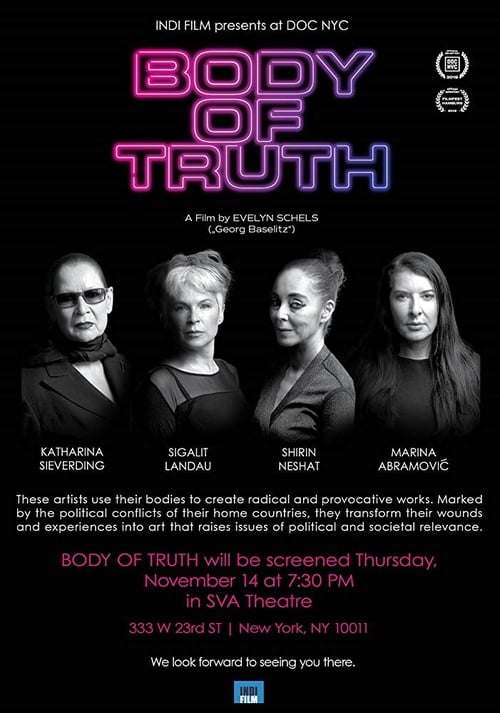
📥 Body of Truth 2020
📥 DOWNLOAD HERE
Watch Movies Online|Full Movie Download|Movies Online Free Websites|Movies Online Stream|Online Full HD Movies. Watch and streaming your favorite full movies online on solarmovie.com and in the app!
132 Minutes | Action, Thriller, Fantasy | 2006-02-23
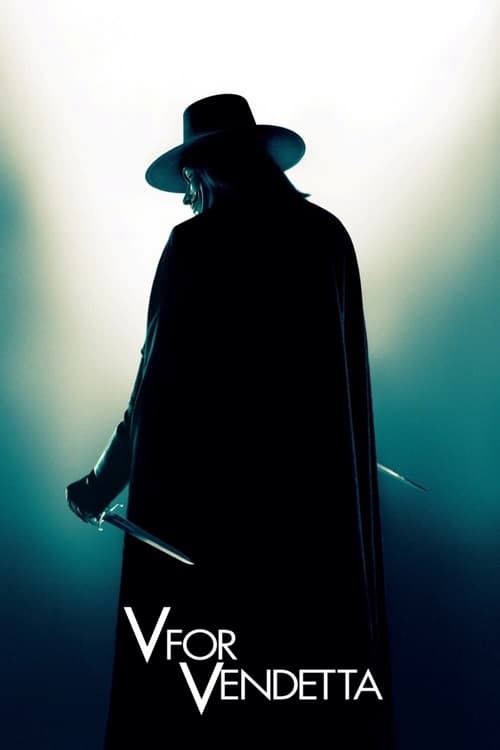
📥 V for Vendetta 2006
📥 DOWNLOAD HERE
With the litany of comic book films being made in 2017, it's hard to understand the role V for Vendetta has played in 'Comic Book Movie' culture. This was one of the early successes of the genre and it continues to shine today in ways other movies (I'm looking at you, Marvel) have not.
The grittiness of the story cannot be understated, this story is DARK. However, the message of the story is one of hope, and hope is a difficult thing to capture. This film captures both, with the help of excellent cinematography and slow-motion action cuts.
I get the sense when I watch this film that something bigger is happening around me, and honestly in 2017, this movie feels more relevant than ever. Themes of state-run media empires, government corruption of the highest order, and the suffocation of all that is 'other' permeates the fabric of this film, and everything is captured beautifully in a noir-esque nightmarescape of future, facist London.
I can honestly say that more than a decade later, this film still shines as one of the great comic book movies and its themes will continue to ring true as long as we have people in the world who exist to limit others. Let's just hope that someday this world does not feel any more real than it does now.
Watch Movies Online|Full Movie Download|Movies Online Free Websites|Movies Online Stream|Online Full HD Movies. Watch and streaming your favorite full movies online on solarmovie.com and in the app!
122 Minutes | Crime, Thriller, Drama | 2019-10-02
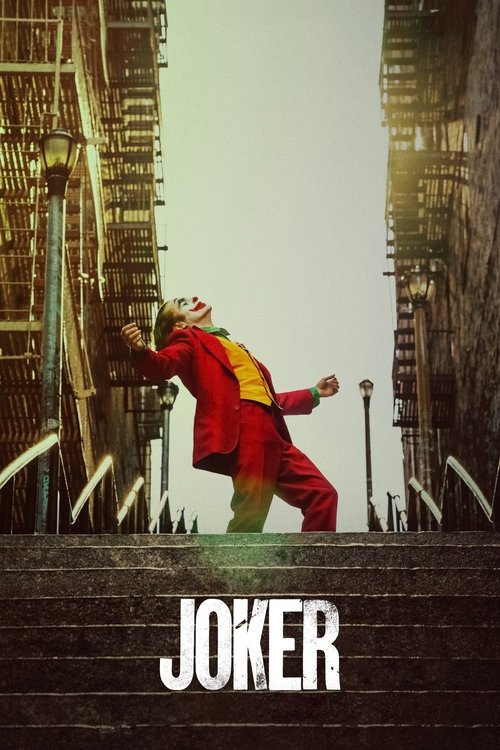
If you enjoy reading my Spoiler-Free reviews, please follow my blog :)
Obviously, Joker is one of my most anticipated movies of 2019. I mean, how couldn't it be?! Besides belonging to the superhero genre, DC has been on a streak of great films within its universe, so an isolated installment definitely excites me, especially about one of the evilest villains ever. It's by far one of the less comic-book-y flicks of the century. It doesn't follow the generic origin story formula, it avoids any cliches associated with the genre, and it's the type of movie that's becoming more and more rare nowadays. It's a character study like we haven't seen in a long time.
I'll simply begin with the person that elevates the entire thing: Joaquin Phoenix. Now, if there's something I'm not going to do is compare his performance with Heath Ledger's. That's the number one mistake people are going to keep making forever. First of all, The Dark Knight and Joker couldn't be more distinct films, even if they belong to the same genre (despite Joker being unique, it's still about a famous comic-book villain). Then, despite Phoenix and Ledger portraying the same "version" of the clown (crazy, sadistic psychopath), the former is 90% Arthur Fleck while the latter is 100% Joker, throughout each of their movies. Finally, Phoenix is the sole protagonist of this feature, while Ledger had the best live-action Batman sharing the spotlight.
In conclusion, it's both unfair, and a bit unreasonable to compare both interpretations since their roles have a different impact on the narrative, as well as each film being entirely different. In the end, both are impressive. However, let's switch to Phoenix since he's the star of this show … He has 2019's best performance, by far! With a strong marketing campaign, I'm sure he'll get that Oscar. I hope so! It's so well-deserved. Todd Phillips and Scott Silver developed a brilliant screenplay, but Phoenix elevates it to a whole other level.
Throughout the entire runtime, I felt weird. Perturbed. Even uncomfortable with what I was watching and consequently feeling. It's a dark, brutal, violent, emotionally powerful origin of a villain who I feel disturbingly empathetic towards. Phoenix makes the story work due to its remarkably captivating display of someone who's mentally ill. Arthur Fleck slowly becoming crazier is due to how society behaves and not due to some chemical pool that transforms his skin white and hair green (nothing wrong with this, but I know which origin story I prefer). "The world is getting crazier out there", and it becomes excruciatingly painful to deal with it, especially when so much is going on with Arthur’s personal life, and most of it he doesn't even realize because he tries to hide everything behind a smile.
It's a screenplay filled with narrative twists that not only pack a punch of surprise but leave you feeling extremely upset. The last act is one of the best in the last few years. If the second act is an enormous build-up, the last one is a terrific payoff. I can't remember the last movie I saw where I loved 100% every single narrative decision. I wouldn't do any of the big moments differently. There are so many excellent references hidden in plain sight that comic-book fans (and fans of the TDK trilogy as well) will love just like I did. In the ending, there's one pivotal moment in particular that serves as the absolute climax … I got chills all over my body. They couldn't have done that scene more perfect. I only have one tiny nitpick with the way some scenes feel repetitive since they neither move the plot forward or give us anything new. Some of these still help to create tension, some feel like they're just… there.
A Best Picture and Best Actor nominations seem to be on its way, but these are not the only achievements that deserve to be recognized. The original score by Hildur Guðnadóttir is incredibly addictive, so much that I'm listening to it while writing this review. It definitely helps to generate tremendous build-up, and it elevates the sinister environment of Gotham City. Lawrence Sher's cinematography is utterly stunning. The underexposure of some scenes is glorious. Sher paints the screen with so many gorgeous shots, especially with his close-ups on Phoenix, where the latter is able to shine. Jeff Groth is also impeccable in the editing room. There are several long takes with Phoenix just giving his all and letting all his emotions out (or keeping them all contained), which is always something I deeply appreciate since it helps with the flow of the narrative.
Regarding the film's controversy surrounding its messages and the incentive to violence, I really don't know what to say. It's ridiculous. I remember those times when going into the movie theater was a surreal experience. It was the number one place for people to forget about their lives, jobs, everything. Joker is a fictional story! It's the origin of one of the worst psychopaths in the history of comic-books and cinema. If people expected to leave the theater "happy" or "joyful", then at least one of the film's message is right: society really is getting crazier. Have people forgotten who Joker is? What could you possibly expect from his origin story?!
Nowadays, no one knows how to behave (social media is the primary source for spreading hate). No one respects the fellow citizen or even the world itself. More and more people only look at their own bellies. Political agendas are everywhere. New extreme movements are created every other year. Social hypersensibility is exponentially growing. The same way some people will hate this movie for not being able (or simply not wanting) to accept that they feel empathy towards a murderer, people all around the world behave like their actions don't reflect on another person's life and on their own planet. If people get ruthlessly violent because they watched Joker, how can someone complain that the film's message is bad when it's eventually true?
All in all, Joker is one of the best movies of the year, and it's definitely on my Top3 at the date of this review. Joaquin Phoenix delivers my favorite male performance of 2019, by elevating a script about the origin of one of the evilest villains ever. The way he gradually becomes more insane is worthy of study, but it's how he's able to make the audience create empathy towards a psychopath that leaves me disturbingly captivated. Todd Phillips produces a character-study filled with an astonishingly tense build-up and one of the most chill-inducing payoffs of the last few years. With every single narrative decision nailed perfectly, Hildur Guðnadóttir's score and Lawrence Sher's cinematography stand out. The lack of restraint in showing the unmerciful violence (physical and mental) that society inflicts on one another is what makes us feel unsettled. Because we know it's mostly true, and we refuse to accept it. It's not a film about the Joker. It's a very realistic portrayal of someone (anyone!) who can become someone like him. And it's disturbingly brilliant!
PS: Robert DeNiro (Murray Franklin) and Zazie Beetz (Sophie Dumond) are also great. Phoenix's performance is so mesmerizing that I almost forgot there were other actors in the movie.
Rating: A
Joker. The character that has existed since 1940, has become so heavy with so many different portrayals, different origins, that it feels impossible for any mortal man alive to impersonate the scattered personalities. It is an insurmountable task for any director to digest it all and still produce one more.
Todd Phillips had a crazy challenge. He brought in one of the best actors alive to lift it with him, Joaquin Phoenix. Together, they have built a mass-market masterpiece which is just above the crop. It is appropriately crazy and completely focussed on the central character. The narrator goes close to the shores of that craziness, wets his feet but remains dry to tell this story. It is like those news reporters which go closer to the burning amazon, but it is impossible to step in the fumes. In no way, Joker is telling his story. Instead, his story is told to us and there are pillars of sanity (like the detectives, asylum clerk etc.) which remain steadfast to give a strong anchor to the audience. This dilutes the effect of the film.
With the copious amount of material on Joker already, I wished to consider this film as a standalone character study vaguely inspired by the batman universe. But this is not entirely possible. I was forced to think about it on two levels. With Batman and Without Batman.
With Batman, The Joker is on the home turf. There have been many renditions of Joker, and Heath Ledger's portrayal is still vivid in my mind. I knew that Arthur here will go on to become someone who is going to say, “Introduce a little anarchy. Upset the established order, and everything becomes chaos. I'm an agent of chaos...”. When I was thinking Joker in the context of Batman, I could not keep Ledger's joker too far away. I was searching for a path for Arthur to go from the mentally unstable to the calculating anarchist. I was left searching for that path when the movie ended. To remain as the crown prince of crime, and to justify the title of the greatest adversary of Batman, just mental instability isn't good enough. He needs to be much more intelligent, much more cunning. These traits are often visible early, In the case of Arthur, I could not find that complete foundation upon which the later psyche can stand. This reminded me of Cameron Monaghan's Jerome Valeska. The joker of my understanding is somewhere between the cruelty of Jerome and pitiable delusions of Arthur. Also, the iconic Batman moment was not needed in this. I kept feeling that Joker is trying to stand with the support of Batman's tale as a clutch. A safety net enforced by the producers.
On the other hand, if I consider this movie as a standalone tale, then it was a bit more satisfying. There are tearjerker movies where nothing good ever happens with the protagonist. A series of bad lucks, or difficulties keep blocking a normal life. He is most definitely poor, has a sub-optimal family background, has a medical affliction which is unique and provides a foundation of the pity I felt. This is not very far from Rani Mukharjee's Hichki if you only consider the medical condition. Rani's Naina had Tourette syndrome while Joaquin's Arthur suffers from pseudobulbar affect. The setting and genre make the two films vastly different. More often than not, I have noticed these disorders lift a lot of burden from the narrative. In the case of Joker, couple his disorder with usually being in the wrong place at the wrong time, you have a travesty of human life. Add to that, an unstable parent, amplify it with the volatile societal conditions, you have a perfect decoction of what Joker is made of. As a tale of its own, it works. The delivery is great thanks to the spectacular performance. It also helps to increase the awareness of mental health. But when you strip off all the Batman context, it remains a well-acted and averagely written tale.
Unfortunately, this is a single film, and I felt it is torn between these two polarising treatments. It wants to find its ground, which it finds. But that ground is far from being sensational. It remains somewhat indecisive. It can not be well soaked in Batman lore like James Gordon's tale, Gotham is. I am considering Gotham because both Gotham and Joker do not feature Batman, but they both have Bruce. Gotham understands its lore and fully embraces it but Joker does not want to. At the same time, as a tale of the psychologically troubled protagonist, Joker tries to play safe with the aim to please audience en-mass. I kept thinking about American Psycho and The Machinist. (Coincidently, both star ex-Batman Christian Bale). Those two take you in the psyche of the protagonist. Those take you inside the burning Amazon and not stand at a safe distance. Joker does not aim to do so.
I am not at all qualified to talk about the acting performances. Joaquin Phoenix is in every frame and the way he waltzes between emotions is terrifyingly amazing. The Tai Chi to calm himself down, the menacing stare when finally becomes the Joker, those are chilling. He lives the character to the best of his abilities. Regrettably, he does not have the same level of writing support which Heath Ledger had and so due to no fault of his own, Joaquin could not topple Heath Ledger's portrayal of the crown prince of crime.
If I consider Todd Philips's entire resume, this was a genre shift for him. He knew very well that the biggest trump card is Joaquin Phoenix, so he takes no risk. He keeps him in focus, almost always all the setting and cinematography works for him. The only exception being Robert De Niro. Robert is allowed to carry his scenes quite independently. I think Todd Philips relied on both these giants to carry their parts. Sadly, I had gone to a theatre which had a bad print or screen so I think I will have to watch it again sometimes to enjoy the cinematography.
I realised, I kept writing a lot and this is already over a thousand words. If you are here and reading still, I must say thank you. To summarise, The Joker worked for me and I enjoyed it, but I would not consider it the best depication of the iconic villain from comic books. The best may yet come.
The Joker is similar to the DC Joker character but is not a criminal genius. The movie was a great depiction of how a person who has been mistreated, lied to, and ignored, totally lacking access to human compassion, can snap. The acting is top notch, and it puts a spotlight on the importance of mental health in modern times.
Okay, this film has already been so widely debated that I’m not sure what I can really add to the conversation. So, I’ll just give my thoughts.
“Joker” is a fairly basic character study of Arthur Fleck, a mentally ill man who feels increasingly marginalized by an uncaring and brutal society in Gotham City. To start, the characters, except for Arthur himself, are pretty flat. They seem to have little purpose other than to further Arthur’s story. This includes Thomas Wayne, who in other media is portrayed as a man of many dimensions, wealthy but caring, and instilling these values in his son Bruce. Here, he is portrayed as much more uncaring and elitist. Which gives much less of an impact in the inevitable alley scene we see in everything remotely related to Batman. More on this in a minute. It’s important to the point.
Arthur suffers a condition that makes him burst into laughter at inappropriate times. He also has other unspecified mental illnesses. We’re never given the specifics. This is actually a little troubling because of the general depiction of mental illness. It almost seems like they are saying that if someone is mentally ill then they are a ticking time bomb and it’s only a matter of time before they go off. This is not a good look.
After a series of events, Arthur begins spiraling downward, but at the same time realizes how much influence he can have over other people, an aspect of the Joker that isn’t often explored. And this is where the characters other than Arthur being rather flat comes into play.
There’s more than one indication that we are actually witnessing these events through Arthur’s eyes. And this creates a brilliant depiction of a narcissistic personality. The only character that gets fully fleshed out is Arthur himself, but he can’t or won’t connect with other people to see their depth. As such, we get to see narcissism from the inside, no connection to others and in fact seeing them as pawns in his own schemes. It’s subtle and definitely not in your face, but if you look carefully, the hints are there.
Those who fear that "Joker" would glorify incel violence or otherwise can rest a little easier, but as I mentioned, the film isn't without its troubling portrayals. It does vilify the mentally ill, which creates a whole host of other issues. The movie swings wildly between "excellent" and just "okay," and sometimes even "meh." As such, it gets a recommendation, but only a mild one.
*A Masterpiece*.
The movie shows the escalating events that made Arthur become the Joker. Initially an inoffensive poor and sick man, Arthur suffered a tide of unfortunate events that pushed him closer and closer to the edge.
Ignored and despised by everyone, sick and alone in the world, and neglected by the State, Arthur becomes progressively more violent until he breaks.
Much more than one more Super-hero movie, *Joker* uses well-known characters to promote the reflection on the "ignored" ones. At least, ignored until they become a Joker.
***Not fun, but absorbing, artistic and tragic***
A mentally troubled middle-aged clown (Joaquin Phoenix) who lives with his mother (Frances Conroy) in Gotham City goes from not good to worse when he finally realizes his true identity. Robert DeNiro plays a talk show host and Zazie Beetz the friendly girl down the hall. Brett Cullen is on hand as Thomas Wayne, Bruce’s rich father.
"Joker" (2019) is an arty, slow-burn character study of the popular DC Comics’ villain, but it’s more of a psychological crime drama/thriller and tragedy than a superhero flick (or, in this case, supervillain). The movie’s captivating from the get-go and practically everything works for a broodingly superb cinematic experience.
There are several amusing bits, but this ain’t a fun flick. It’s heavy and tragic. But what’s the message? Simply that this is how a quirky man who wanted to make people laugh became The Joker. He’s a little reminiscent of the clown in Steve Gerber’s “Night of the Laughing Dead” in Man-Thing #5 (1974).
The movie runs 2 hours, 2 minutes, and was shot in New York City (Bronx, Harlem, Manhattan) and nearby New Jersey (Jersey City & Newark).
GRADE: A-/A
_Joker_ is a tour-de-force of a movie, not quite like anything I've seen, maybe since Taxi Driver. At its core it's a movie about the breaking point of a broken man, wrapped under the banner of a comic book movie that, take out the Waynes, works on its own.
Joaquin Phoenix truly gives a transformative performance (not unlike Heath Ledger) and will say is deserving of an Academy Award. The supporting cast all did well, though, and it is a small role, Zazie Beetz was great and De Niro had his moments, particularly at the end.
Got to hand it to Todd Phillips, between this and the good, albeit flawed, War Dogs, has proven to be more than those Hangover movies.
No, this isn't a feel-good movie and while it does sit at the top of my 2019 list, not entirely sure when I'd revisit. **4.75/5**
the ‘Hangover 2 & 3’, the two most uncomfortable comedies he’s ever directed that felt more crime drama than anything funny. There’s also some dark humor in ‘Joker’ that involves a door chain. It’s silly, yet absolutely terrifying with the given context. A complete departure from his other work and that’s why I think it’s one of his best. I honestly think he made something so unique and meaningful. Seriously, I do.
The score by Hildur Guðnadóttir helped set the tone tremendously. A melancholy tone with a chaotic twist. A representation of Arthur slowly drowning in his own misery and pain. A little fun fact: The score for the film were written based on the script even before the actual filming of the movie started, which I think is the best way to do it, if you ask me. Someone to imagine movie by songs and incorporate their interpretation through music.
The cinematography was gorgeous and there’s a handful of shots that has imprinted into my memory. Lawrence Sher does an excellent job off showing the decaying Gotham city and the sewer waste look of the city. Bright neon lights with striking colors that manage to make the most run down of places look pretty.
I like how they actually gave Thomas Wayne a character rather than “guy gets shot in alleyway”. He’s portrayed as a ruthless man with blunt ways of saving Gotham City. However he loves his wife and son, so his unforgiving attitude was all for the shake of keeping his loved ones safe. He’s also a massive movie buff where he often goes to watch the classics on the big screen. So it’s an interesting take on the character viewed in somebody’s else perspective.
There’s a scene where Arthur goes to watch a comedy standup show to take notes on a comedians act. Every time a joke is told and everyone laughs, his face is frozen in place with an unsure grin while his eyes look around the room wondering why everyone’s laughing, but when the laughter dies down he jumps to live with a delayed laugh. It’s moments like that are simple, yet says a lot about him. Basically showing how disconnected he is with humor and everyone else.
Now lets talk about the controversy that's been surrounding this movie:
This is one of the most ludicrous controversy in recent memory. The movie will not cause or inspire violence, but shows why violence happens. I mean, there probably has been incidents when somebody committed a horrendous crime because their were influenced by a movie or a game. However, it’s he/she that should be brought into question, not the creators. Maybe this movie could inspire people to think twice about how they treat others. Why not think about the positives? If “Joker” is going to be responsible for violence and mass shootings, then so is every other movie with any form of violence ever. If people really care about how violence is portrayed in movies, then Rob Zombies ‘3 From Hell’ should also receive the same attention. Just imagine ‘Natural Born Killers’ times 100, but I guess it’s not mainstream enough for any of that. And sure, there’s some brutal and raw approach to violence in ‘Joker’, but we all have seen worst. ‘Deadpool’ is more graphic than this. It's not the directors duty to teach morals to the viewer. People will never learn to stop pointing fingers at things to blame and actually do something about it! People often understandment how much power their got.
Anywhere, sorry about that folks, just had to get that off my chest. Go and check it out.
Overall rating: “Send in the clowns” ⇠ you’ve gotta sing that like Frank Sinatra.
It is intersting to analyze this movie in a context of global increase of violent social movements against the Establishment. Joker succeed in making me accept a violent reactions without really explicit political fundation.
This is going to be one of those posts where I go against the mainstream but my reaction when I watched this movie was: You got to be f… kidding me?
The only resemblance to the REAL joker in this movie is the name. As far as I am concerned this movie is an insult to the fans of Batman and the REAL Joker.
The “Joker” in this move is a unintelligent deranged nutcase. There is a sob story in the background about how he became that way which is totally uninteresting.
The REAL joker is a intelligent criminal mastermind. I was waiting for this nutcase to actually become that for the entire movie. Spoiler alert, it never happened! This guy starts as a useless sobbing nutcase and he ends the movie as the same useless sobbing nutcase.
The movie has NOTHING to do with the real Joker. It is a blatant attempt to garner support for a unrelated psychopathic thriller by using the Joker name. If it would have been advertised as such I probably would have, if not liked it, so at least appreciated it for it’s qualities. It is indeed a well done movie technically and the main character is indeed excellently performed.
However, even if I try to distance myself from the deceitful Joker label, I find it overall boring, too long and really a movie about a psychopath probably made by someone with mental issues himself. But then that’s Hollywood today.
That the politically biased and elitist so called “critics” on sites like Rotten Tomatoes like it is not really surprising but I have to confess that I am somewhat surprised at the rave ratings by real viewers on some other sites.
Honestly, I was expecting to be disappointing by this movie. Then I am always cautious about movies getting rave reviews, especially from the previously mentioned totally useless and crappy “review” site. I did not expect this level of disappointment though. Epic fail as far as I am concerned.
